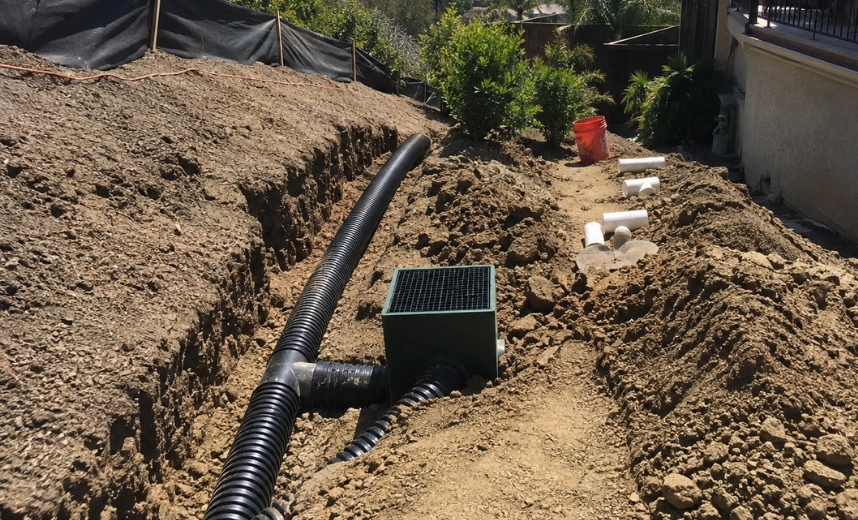
Hillside drainage helps manage rainwater moving across sloped properties where uncontrolled runoff can contribute to erosion, saturated soil, and water collecting around lower areas. Our contractor network evaluates slope direction, elevations, runoff patterns, and discharge options for Los Angeles hillside properties.
An effective hillside drainage plan intercepts water in appropriate locations and directs runoff through controlled drainage paths. System design may account for surface flow, concentrated runoff, soil conditions, existing grades, and changes in elevation that influence how stormwater travels across the property.
Professional Hillside Drainage Planning
Sloped sites require drainage planning that considers more than where water collects. Contractors represented by Drainage Pro LA assess uphill runoff, natural flow paths, grade transitions, erosion-prone areas, and lower elevations before recommending an appropriate drainage approach.
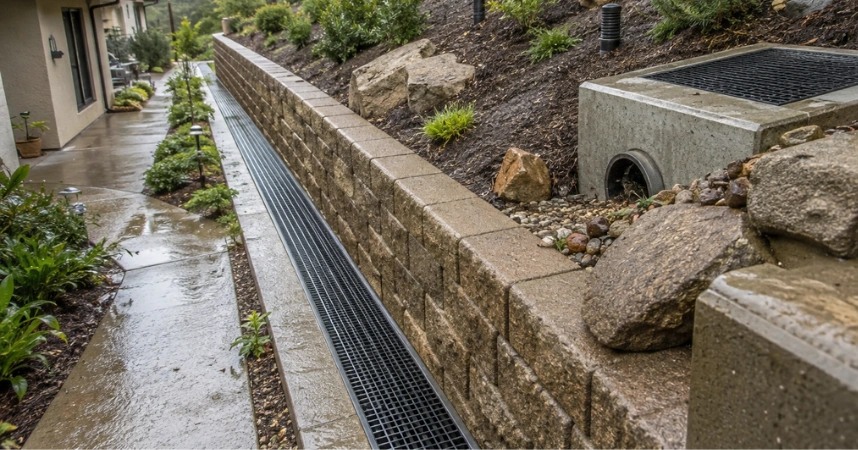
Depending on the property, a hillside drainage plan may incorporate surface drains, catch basins, French drains, swales, or underground piping. The goal is to manage runoff at critical points and establish a controlled route that responds to the site's existing terrain.

Slope Runoff Control
Drainage planning manages water moving downhill before runoff concentrates in vulnerable areas.

Controlled Water Routing
Planned drainage routes move runoff through suitable paths toward appropriate discharge points.
Where Hillside Drainage Is Needed
Hillside drainage is important where rainfall travels quickly across sloped ground, concentrates near structures, washes soil from landscaped areas, or collects at the bottom of a grade. These conditions are common on hillside and multi-level residential properties throughout Los Angeles.
The appropriate solution depends on how runoff enters, crosses, and leaves the site. Licensed contractors within our network consider slope, soil, existing drainage, hardscape, landscape areas, and safe discharge conditions when determining how water should be intercepted and redirected.
Slope Runoff Management
Controls downhill runoff where concentrated water can wash soil or overwhelm lower areas.
Soil Erosion Control
Helps manage concentrated water movement that can contribute to erosion on sloped ground.
Hillside Drainage FAQs
Learn about hillside runoff, erosion, drainage routing, sloped yards, and important site conditions to consider when planning drainage for a hillside property in Los Angeles.
The right system depends on slope, runoff volume, soil, existing grades, and available discharge points. Hillside properties may use French drains, catch basins, surface drains, swales, or underground piping based on site conditions.
Runoff can be managed by identifying where water enters and concentrates, then using suitable drainage features to intercept and redirect it. The approach should account for slope, flow volume, erosion, and discharge conditions.
Drainage can help manage concentrated runoff that contributes to surface erosion. The appropriate solution depends on the source of the water, slope conditions, soil characteristics, and how runoff can be safely redirected.
Some properties benefit from drainage at several elevations or runoff collection points. The number and type of drains depend on slope length, water volume, grade changes, problem areas, and the planned drainage route.
Runoff should be routed toward an appropriate discharge location based on property conditions and applicable requirements. Drainage planning should avoid simply transferring concentrated water to neighboring properties or other vulnerable areas.