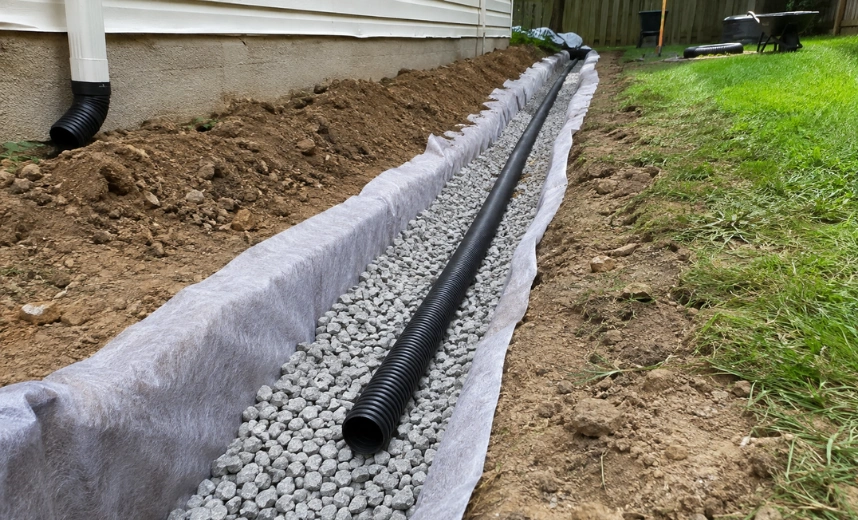
French drain installation helps manage water that saturates soil, collects along foundations, or leaves sections of a yard persistently wet. Our contractor network evaluates drainage patterns, soil conditions, elevations, and outlet options to determine an appropriate French drain layout for Los Angeles properties.
A properly designed French drain uses a sloped trench, drainage aggregate, and perforated pipe to intercept unwanted groundwater and move it toward a suitable discharge point. Correct depth, pipe slope, filtration, and routing are important for dependable long-term drainage performance.
Professional French Drain Installation
Effective French drain design starts with identifying where excess water enters and moves through the property. Contractors represented by Drainage Pro LA assess saturated areas, existing grades, soil characteristics, nearby structures, and available discharge routes before recommending trench placement.
Depending on site conditions, the system may include perforated drainage pipe, washed aggregate, filter fabric, and connections to solid outlet piping. Each component is planned to encourage subsurface water collection while helping limit sediment from entering the drainage system.
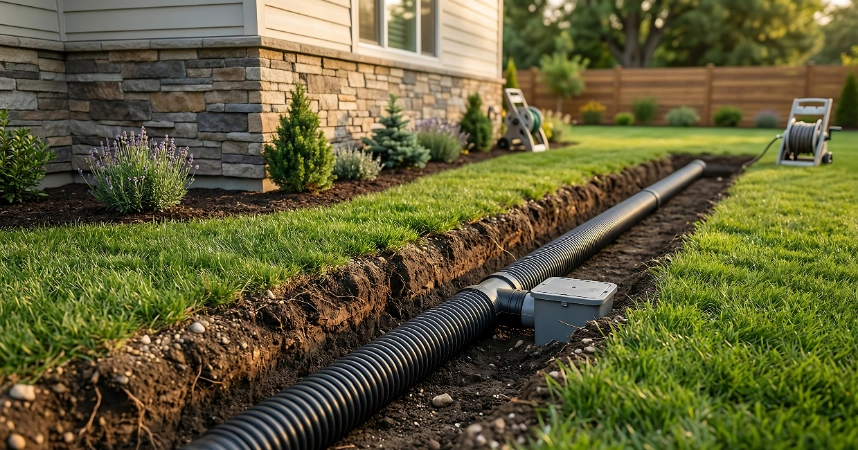

Subsurface Water Control
Perforated drainage pipe intercepts excess water within saturated soil and redirects it through the system.

Planned Drainage Route
Proper trench slope helps collected water move toward a suitable planned discharge location.
Where French Drains Work Best
French drains are commonly considered for persistently soggy yards, water moving through sloped soil, saturated areas beside structures, and locations where subsurface moisture remains after rainfall. They can also complement broader yard drainage or grading improvements when site conditions require multiple drainage methods.
Successful installation depends on more than placing pipe in a trench. Licensed contractors within our network consider trench depth, drainage slope, aggregate coverage, filtration, pipe routing, soil conditions, and the final outlet when determining a suitable configuration for the property.
Below Surface Drainage
Intercepts excess moisture moving through soil before it continues into persistently saturated areas.
Planned Water Routing
Moves collected subsurface water through a sloped drainage path toward an appropriate outlet.
French Drain Installation FAQs
Learn about French drain placement, trench depth, perforated pipe, drainage gravel, discharge planning, and other important considerations when addressing subsurface water on a Los Angeles property.
French drains are typically installed where excess subsurface water moves through soil or creates persistent saturation. Placement depends on elevations, soil conditions, water direction, nearby structures, and the availability of a suitable drainage outlet.
A French drain can help when excess water is saturating the soil and has an appropriate route for drainage. Site grading, soil characteristics, water source, trench location, and discharge conditions determine whether it is suitable.
A typical French drain includes a properly excavated trench, perforated drainage pipe, clean drainage aggregate, and filtration material. The exact construction can vary according to soil conditions, drainage requirements, and the intended outlet.
French drain depth varies according to the source of the water, site elevations, soil conditions, pipe requirements, and intended outlet. The trench should be planned specifically for the drainage conditions found on the property.
A properly designed and installed French drain can provide long-term drainage performance. Service life depends on construction quality, filtration, soil conditions, sediment exposure, pipe materials, surrounding landscaping, and ongoing drainage conditions.